Skip to content

Find your flight


Directional maps

  1. News
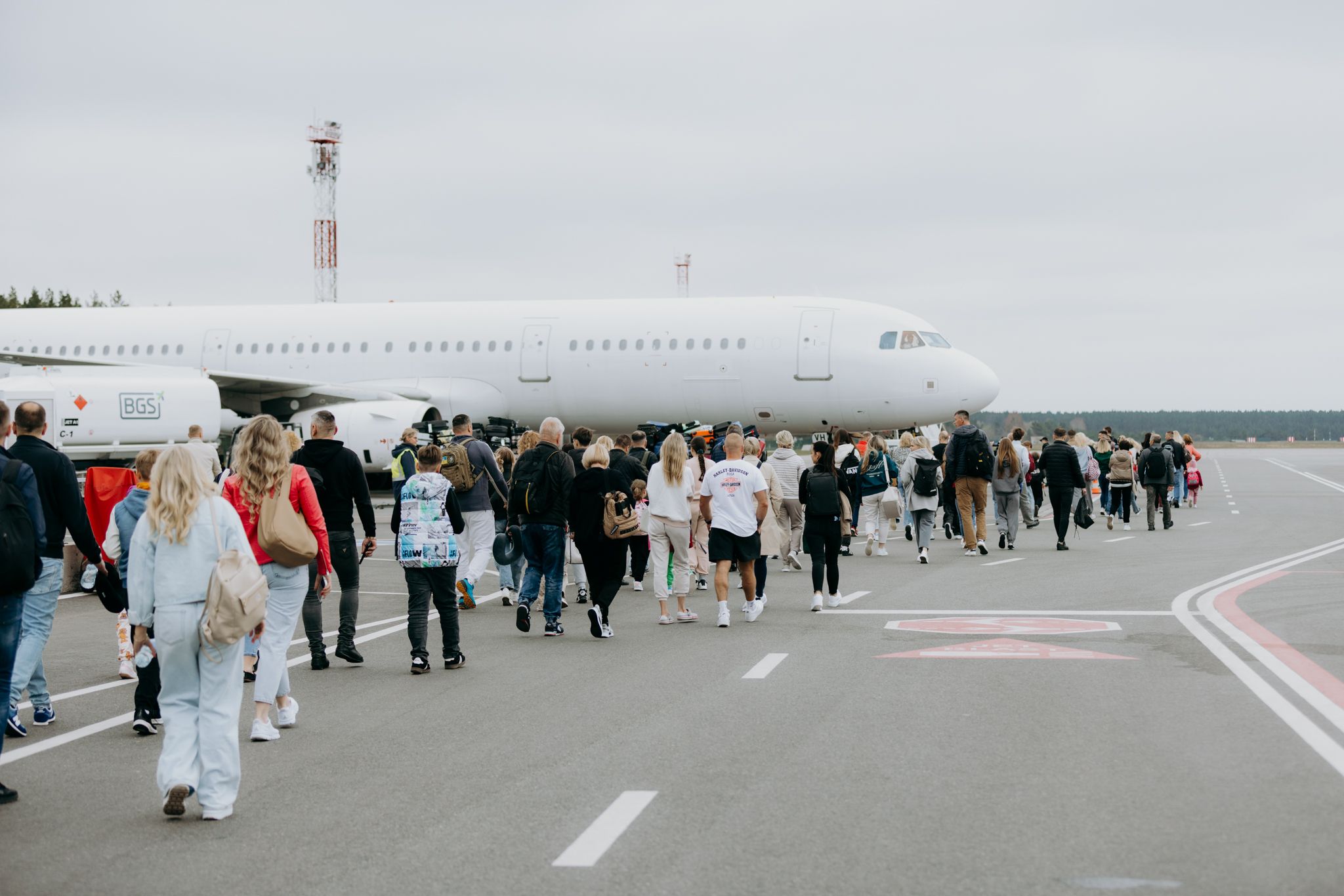
Nearly 23,000 passengers have used special assistance at Lithuanian Airports this year Nearly 23,000 passengers have used free special assistance at Lithuanian Airports this year – 15% more than during the same period last year. To make travel easier for passengers with individual needs, Lithuanian Airports brought together organisations representing them for the fourth year running. At the meeting on 17 November, participants discussed progress over the past year, the challenges passengers still face and priorities for future plans.   “For many people, flying is an opportunity to explore and discover, but that opportunity depends on accessibility. Today showed that meetings like this work better than formal working groups: we are acting on the feedback and suggestions we hear. Next year, the airport will have a sensory room, more accessible toilets in different areas and many other improvements to make journeys as smooth and comfortable as possible,” says Lukas Paškevičius, Vice-Minister of Transport and Communications.   “A passenger’s journey is made up of many small details. What seems simple to one person can be a barrier to another, so hearing different experiences matters to us. These meetings help us understand what works, what still needs improving and what to consider when planning future projects. For example, we shared last year’s recommendations with the team designing Vilnius Airport’s new arrivals terminal,” says Diana Bankauskienė, Acting CEO of Lithuanian Airports.   More passengers use special assistance at Lithuanian Airports each year: 15,000 in 2023, 18,000 in 2024 and 23,000 in 2025. Around 26,000 passengers are expected to use the service in 2026. According to the Acting CEO, this growth reflects greater passenger confidence. Knowing that help will be available at the airport gives people more confidence to travel and ask for support.   More accessible spaces and assistance that meets passengers’ needs Passengers’ individual needs are an essential part of how Lithuanian Airports plans its facilities and services. The aim is to help passengers complete as much of their journey as possible independently, with support readily available when needed.   All three airports have lifts, ramps, accessible toilets, waiting areas and assistance call buttons. Tactile paths help passengers find their way around Vilnius and Kaunas airports. All three airports also have information screens adapted to passengers’ needs, information in Braille, seating with armrests and a separate security screening area for passengers with individual needs.   The airports also take part in the international Hidden Disabilities Sunflower initiative. A sunflower lanyard helps staff recognise passengers who may need more time, attention or support, even if their needs are not immediately visible.   Free assistance from the moment you arrive Free special assistance at Vilnius, Kaunas and Palanga airports covers the entire journey through the airport, from meeting passengers and helping with luggage to guiding them through checks and helping them board the aircraft. On arrival, staff meet passengers on board and, depending on their needs, accompany them to the point where they leave the airport.   Passengers can request help when they reach the airport by pressing an assistance call button or speaking to check-in staff. To help the team prepare, passengers are encouraged to book assistance when buying their ticket or notify their airline or travel agent at least 48 hours before the flight.   “We want passengers to feel comfortable asking any member of our team for help and to know they will be understood. That is why all Lithuanian Airports employees must complete training on assisting passengers with individual needs. Everyone should know how to ask what support a person needs, how to provide it and who to involve when necessary. These everyday interactions shape the experience passengers take away with them,” says Aušra Burškienė, Project Manager for Individual Passenger Needs and Mobility at Lithuanian Airports.   Detailed information on assistance and preparing for travel is available on the Vilnius, Kaunas and Palanga airport websites.
  1. News
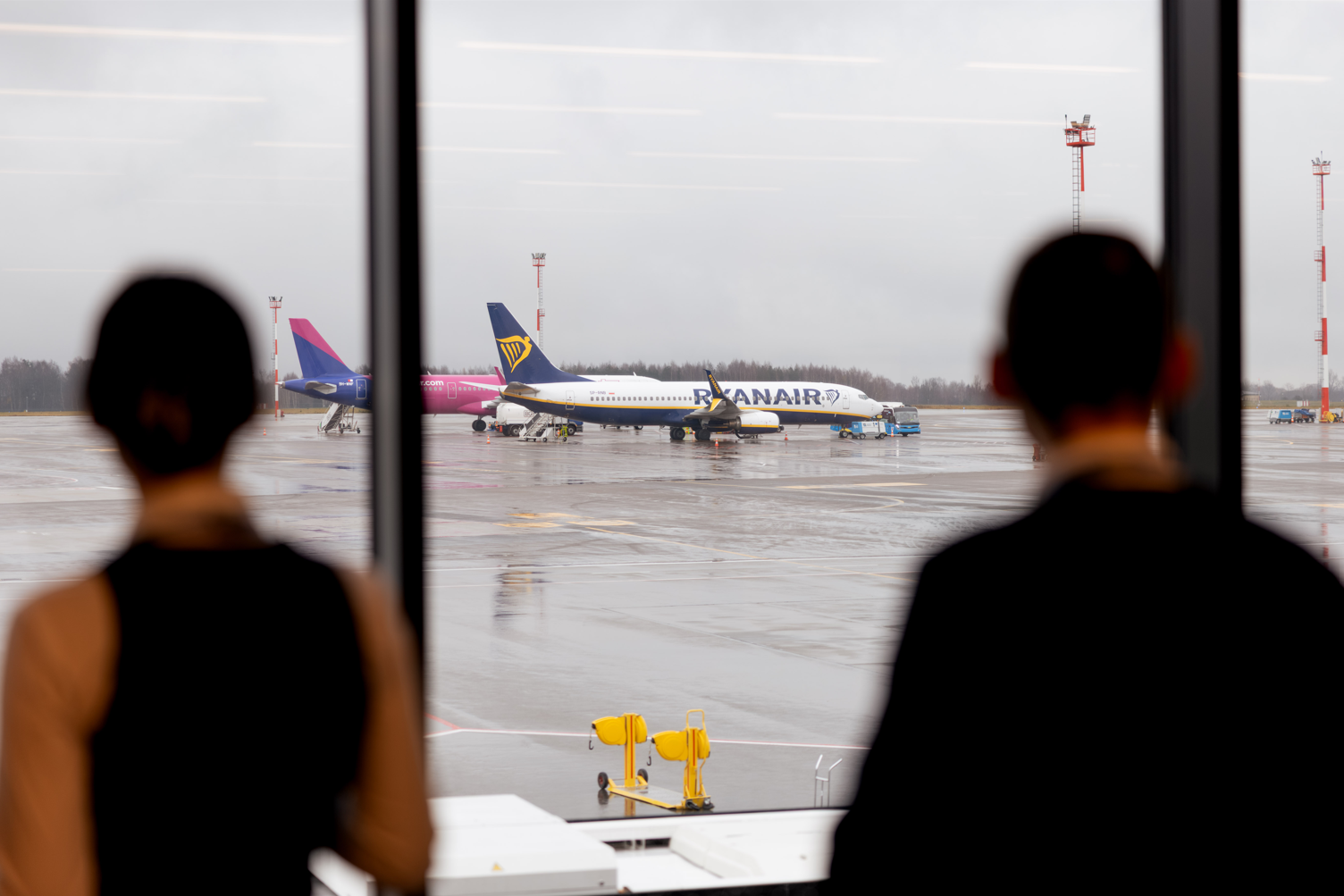
Lithuanian Airports’ reminder to passengers: Ryanair check-in and bag drop deadlines change tomorrow Lithuanian Airports reminds passengers that from Tuesday, 10 November, Ryanair’s airport check-in and bag drop will close 60 minutes before the scheduled departure time, instead of 40 minutes. This change applies to passengers checking in at the airport or travelling with checked baggage. Passengers who have checked in online and are travelling with hand baggage only are not affected. The earlier deadline will give passengers more time to get through security and, if needed, border control, and reach their boarding gates on time. For a smoother journey through security, passengers can also use Fast Track at Vilnius and Kaunas airports. The service provides access to a separate priority security lane. More information is available under Services on the Vilnius and Kaunas airport websites. This winter, Ryanair flies from all three Lithuanian airports – Vilnius, Kaunas and Palanga. The airline offers around 15 destinations from Vilnius, including Barcelona, Berlin, Dublin, London, Milan, Rome and Vienna. It also serves around 15 destinations from Kaunas, including Alicante, Malaga, Copenhagen, Edinburgh, Liverpool and Dublin. From Palanga, Ryanair flies to London Stansted Airport. The latest information on destinations and flight schedules is available on the Lithuanian Airports websites.
  1. News
Lithuanian Airports’ winter flight schedule: A new route, more European capitals and increased flight frequencies A winter weekend in Prague, a skiing holiday in the French Alps or a getaway to sunny Tenerife – the aviation winter season, starting at Lithuanian Airports on 25 October, will offer a wide range of travel opportunities. The 2026–2027 winter flight schedule will feature a new route to Geneva, returning seasonal flights and more direct connections to European capitals. During the upcoming season, Vilnius Airport will offer 48 scheduled routes, Kaunas Airport 15 and Palanga Airport 6. The total number of scheduled and charter routes across all three airports will reach 77. “Decisions made by individual airlines sometimes lead to hasty conclusions about Lithuania’s overall air connectivity. However, it is important to look at the bigger picture. Lithuania’s gateways to the world are opening wider. This winter season, Vilnius will offer direct flights to 20 European capitals, while flight frequencies to several major European aviation hubs will also increase. Our goal is to ensure that people can travel safely and conveniently, businesses can connect more easily with international partners, and Lithuania becomes increasingly accessible from abroad,” says Minister of Transport and Communications Juras Taminskas. “We are entering this winter season with important developments for passengers – from the new route to Geneva to a wider choice of directly accessible European capitals, including the recently launched Wizz Air flights to Berlin. In addition, compared to last winter, flight frequencies will increase on 15 routes. This means greater flexibility when planning trips, whether for a short business visit or a weekend getaway to a European city,” says Gintarė Norvilaitė-Tautevičė, Acting CEO of Lithuanian Airports. Flight frequencies from Vilnius Airport will increase. Compared to last winter, routes to Warsaw and Helsinki will each gain an average of four additional flights per week, while Copenhagen, Frankfurt, Stockholm and Brussels will each see one additional weekly flight. More flights are also planned from Kaunas Airport, with two additional weekly flights to Edinburgh and one additional weekly flight each to London, Liverpool, Alicante and Stockholm. Flight frequencies to Copenhagen from Palanga Airport will also increase. A new gateway to the Alps via Geneva One of the highlights of the winter season for active holidaymakers will be more opportunities to reach ski resorts in the Alps. Direct flights from Vilnius to Geneva will launch on 2 January 2027. The Swiss city, widely known as an international centre for diplomacy and business, also attracts travellers thanks to its convenient connections to popular ski resorts in France and Switzerland, including the renowned Chamonix resort at the foot of Mont Blanc. The new flights will operate once a week until the end of the ski season in late March. Wizz Air flights to Grenoble, located at the gateway to the French Alps, will also return to the winter schedule. Passengers will continue to have direct connections to Turin in Italy, Zurich in Switzerland and Munich in Germany. Winter holiday options expand with returning flights to Tenerife and Sharm El Sheikh While some travellers head for snow-covered mountains in winter, others look for a chance to escape to warmer destinations. For those planning a winter getaway in the sun, the Lithuanian Airports winter schedule will continue to offer routes to southern Europe and more distant warm-weather destinations. Scheduled flights from Vilnius will connect passengers directly to Barcelona, Malaga, Malta, Larnaca and Dubai. Scheduled flights to Tenerife, the largest of the Canary Islands, known for its mild climate and volcanic landscapes, will also return to the winter schedule. From Kaunas, passengers will be able to choose direct flights to three southern European destinations: Alicante and Malaga in Spain, and Paphos in Cyprus. Charter flights will further expand the range of holiday destinations. From Vilnius, charter services are planned to Antalya in Turkey, Tenerife in Spain, and Hurghada and Sharm El Sheikh in Egypt. Notably, charter flights to the popular resort of Sharm El Sheikh will operate from all three Lithuanian airports this winter. This will be particularly relevant for passengers travelling from Kaunas, as the holiday route returns to Kaunas Airport's schedule following a successful winter season last year. More European capitals within reach – for short breaks and onward journeys This winter season, passengers will be able to fly directly from Vilnius to as many as 20 European capitals, compared to 18 during the previous winter season. Prague and Reykjavik, two European capitals added to Vilnius Airport's route network last summer, will remain on the winter schedule. Prague is an attractive destination for short winter breaks, drawing visitors with its historic Old Town and traditional Christmas markets during the festive season. Meanwhile, direct flights to Reykjavik provide access to Iceland during a period when travellers have the opportunity to witness the Northern Lights. In December, flights to Reykjavik will operate more frequently, three times a week, making it even easier to plan a short getaway to the land of snow and volcanoes. The winter schedule will also retain Wizz Air flights from Vilnius to Gdansk, launched during the summer season. During the Christmas period, Norwegian will operate flights from Palanga to Bergen. This connection is particularly important for people travelling between Lithuania and western Norway during the festive season. Connections to major European aviation hubs remain equally important. Direct flights to Amsterdam, Frankfurt, Helsinki, Copenhagen, Warsaw, Vienna and Zurich allow passengers not only to reach these cities but also to conveniently connect to numerous destinations across Europe and other regions of the world. Overall, air connectivity with European capitals will improve by 11%, while the availability of connecting flights via major European aviation hubs will increase by 8%. The 2026–2027 aviation winter season will run until 27 March 2027. An interactive route map and up-to-date flight information are available on the Lithuanian Airports website.
  1. News
Lithuanian Airports set another all-time record in June as passengers grow by 11% Lithuanian Airports (LTOU) have reported that in June, Vilnius, Kaunas and Palanga airports jointly served almost 742 thousand passengers and set another all-time record. In the first month of the calendar summer, all three airports received record passenger flows which grew by as much as 11 percent compared to June last year. In May, LTOU served almost 735 thousand, in June – the Lithuanian Airports network continued to maintain record growth trends and provided services to 741.8 thousand passengers. This is as much as 11.2 per cent more than in June last year. According to LTOU data, passenger flows in the first half of this year are higher compared to the first half of the previously record-breaking year 2025. Each month of the first half of this year brought new all-time records to Lithuanian Airports. The largest growth in June was achieved by Vilnius Airport – 13.1 per cent. More than 547 thousand passengers chose this airport for their trips. Kaunas Airport also increased its flows significantly (by 6.4 per cent), ensuring comfortable travel for almost 156 thousand passengers. In June, the number of passengers at Palanga Airport also grew, reaching almost 39 thousand. – 4.8 per cent more compared to the same period last year. All three airports not only maintained the growth of passenger traffic in June, but also exceeded the records achieved in the same period last year. "We are glad that June brought another all-time record to Lithuanian Airports. Despite the duration of June – only 30 days, we managed to achieve double-digit growth of 11 percent across the entire network. This means that all six months of this year have set a new record for us, which reflects the unfading desire to travel and get to know the world through new and already popular destinations," says Simonas Bartkus, CEO of Lithuanian Airports. In total, 9.4 percent more flights took place on the LTOU network in June 2026 than in the same month in 2025. In June of this year, LTOU served almost 5.8 thousand. flights, most of them – over 4.2 thousand. – At Vilnius Airport. The number of flights served grew at all three airports in June, while the most significant growth (11.1 per cent) was also recorded at Vilnius Airport.
  1. News
Lithuanian Airports continue to renew as new websites released Lithuanian Airports (LTOU) is starting the summer with the company’s new websites. From now on, the online home of all three airports – Vilnius, Kaunas, and Palanga – is united by a common design, more functions and a smoother browsing experience.   “We are consistently implementing LTOU’s strategy of providing the best passenger experience and offering innovative solutions, so we are pleased to introduce our new airport websites that are designed for smooth and convenient navigation for millions of visitors every year. We are entering a new stage in the digital space, responding to today’s technological needs. I believe that the overall design of all websites and the latest features will allow people to quickly find information, help plan a trip and encourage to use various services provided at the airports,” says Nerilė Mažeikienė, Director of Passenger Experience and Digitalization at Lithuanian Airports.   The airports’ websites have been updated after a seven-year break. N. Mažeikienė notes that during this period, passenger flows have increased significantly, the range of services has expanded, and consumers are becoming more and more proficient in using artificial intelligence tools on mobile devices.   The updated websites meet the highest cybersecurity requirements, and suppliers ensure their uninterrupted availability.   New websites – more convenient, safer and clearer for passengers   Before the flight, there are detailed instructions: from baggage rules and the database of prohibited items to preparation for security checks and information for passengers with individual needs.   Transport solutions:  integrated parking reservation, detailed information about the Kiss & Fly area, intercity and public transport schedules. Passengers will also find information about car-sharing services in this section.   After the flight, a convenient electronic form has been developed for the management of lost items, so that passengers can quickly and easily report their lost property and receive prompt assistance.   The improved flight information module has also become more convenient, where passengers will find all the information related to their flight. After choosing their flight, each passenger will find a complete travel plan, from check-in desks to boarding gates. The module also provides information on how long a passenger will spend on average at individual points of the airport before the flight. In addition, a fast-track service can be purchased here with just a few clicks of a button.   In the flight information module, passengers will find information about the air temperature in the area they are traveling to. A module of prohibited items is also presented: those who doubt whether it is possible to take one or another item on their trip now simply turn on the tool, which provides a clear answer.   Passengers can find all the services offered by Lithuanian Airports in one place by visiting the e-shop.   The direction of improvement is determined by the passenger experience   The new websites of Lithuanian Airports are created not only as information portals, but also as an evolution-oriented platform, in the process of improvement of which passengers themselves are directly involved. According to Mažeikienė, a lot of attention is paid to promoting feedback. For example, on the reviews page, passengers can not only write a text comment, but also interactively tag a specific location on the website that they would like to comment, improve, or report an error they notice.   The digital platform ensures a direct connection with the development team: after submitting your offer and providing an e-mail address, the information reaches the LTOU digital channel development specialists. As a result, the company can proactively and quickly respond to the real needs of passengers and promptly adjust the content or functionality of the website.   “We strive for the passenger to become a co-creator – their real experiences and insights help the team to discover new ideas that might not be noticed during internal processes,” notes N. Mažeikienė and emphasizes that the tool is part of the broader LTOU strategy aimed at ensuring the best passenger experience in the digital space. “Since the new platform is designed in such a way that additional functions can be easily implemented in the future, passenger feedback becomes the main lever when compiling a list of priorities. We want to create a digital home that would be as comfortable as possible for millions of guests,” says the Director of Passenger Experience and Digitalization at LTOU.   Record traffic – also online   LTOU manages four websites – for each of the airports, and a corporate one. Each website is available in two languages – Lithuanian and English. It is estimated that websites are visited an average of two million times a year, and three-quarters of visits are made using mobile devices.   Most often, users look for information about flight schedules, connectivity to the airport, security requirements, and services provided – shops, restaurants, parking, etc.   The website of Vilnius Airport is accessible by links www.vno.lt or www.vilnius-airport.lt, Kaunas Airport – www.kun.lt or www.kaunas-airport.lt, Palanga Airport – www.palanga-airport.lt, Lithuanian Airports – www.ltou.lt.
  1. News
Palanga Airport installs advanced drone detection system: residents are urged to respect rules Lithuanian Airports (LTOU) have announced that a new advanced drone detection system has been installed at Palanga Airport. The new equipment was installed as the airport welcomes record passenger flows and an increasing number of flights. Palanga Airport invites residents and visitors of the city to obey rules and cooperate, but warns that violators will face fines. A similar system will soon start operating at Kaunas and Vilnius airports.   The established drone control zone of the airport, where drone flights not coordinated with the respective services are prohibited, includes not only Palanga Airport and its surroundings, but also adjacent inhabited areas, such as Kunigiškiai, the northern part of Palanga, as well as the territories north of Palanga Airport towards Šventoji. It should be emphasized that the corresponding part of the seaside (beach) also falls into this zone. No-fly zones for drones have been formed taking into account the take-off and landing paths of aircraft at various altitudes in order to ensure the highest level of aviation safety. This year, 37 unauthorized drone flights have already been recorded in the airport’s aircraft control area.   The exact boundaries of the zone can be checked here: https://utm.ans.lt/avm/#p=7.59/55.159/23.825   “Unmanned aerial vehicles pose a new type of threat to aviation safety and security. In order to maintain the highest standards of aviation security while the airport is serving record passenger flows, we have installed the latest generation drone detection system, which allows us to detect unauthorized activities with extreme accuracy. We encourage the residents and guests of Palanga to enjoy the seaside with their own eyes, and if they see the drone – to report by phone 112. Aviation safety is in the common interest of all of us, but we warn that violators will be identified, and unauthorized activities will result in liability,” says Vidas Kšanas, Director of the Safety, Security and Resilience at Lithuanian Airports.   “Drone users still underestimate the risks and legal requirements. Our response is prompt and principled, especially at the approaches to airports and other strategic objects. We remind all that a reckless drone flight can cause serious consequences for air traffic safety,” says General Viktoras Grabauskas, Commander of the Public Security Service.   Drone detection system – highly advanced and accurate   The system monitors the airspace with the help of antennas and detects the scattering of radio signals. Within the boundaries of the aerodrome and its protection zones, monitoring is carried out around the clock throughout the year. The technical capabilities of the new system allow to determine the location, direction of movement, altitude, time and other identification parameters of the drone, as well as the geographical location of the drone operator. During the development of the new system, response algorithms have been established in interaction with aviation security partners – the Public Security Service (VST) and local police. In order to ensure airspace safety and flight safety, decisions are made together with the air navigation services provider on the possible suspension of air traffic, and VST forces are sent to detect the violator.   In all cases when an unauthorised drone flight takes place in the prohibited zone, the drone detection system “Drone Radar” notifies the Head of Aviation Security of Palanga Airport, the Head of the Public Security Service Forces protecting this important state object, the Klaipėda County Police watchmen and the Senior Officer of the Joint Operations Centre of the Public Security Service.   Upon receipt of a notification from the system, the crews of the Public Security Service and the police immediately react to the violation of the prohibited zone of Palanga Airport, and the interaction of the response between the forces responding to the violations is ensured and coordinated by the Joint Operations Centre of the Public Security Service.   Significant fines for violators   Administrative proceedings against the detained offender are carried out by the officers of the Public Security Service. Since the activation of the system for piloting drones in the prohibited zone of Palanga Airport without permission, the Public Security Service has already brought 5 persons to administrative responsibility.   It should be noted that piloting drones in prohibited zones without a permit, in accordance with Article 393 (4) of the Code of Administrative Offences of the Republic of Lithuania, incurs a fine from 400 to 800 euros and confiscation of the drone may be imposed. If such a violation is committed repeatedly, a fine from 800 to 1200 euros would be threatened, with mandatory confiscation of the drone.   Safe drone control is everyone’s shared responsibility   The Public Security Service and Lithuanian Airports remind that before using an unmanned aircraft (drone), it is mandatory to make sure that the place where it is located does not fall into the prohibited territory and that the prior consent of the legal entity of that territory is required. This can be checked: https://utm.ans.lt/avm/#p=7.59/55.159/23.825   If the drone has a camera, the operator must obtain a certificate from the Transport Competence Agency: https://tka.lt/katalogas/bendra-informacija-2 It should be emphasized that drone manufacturers do not assume responsibility for automatic warnings and unauthorized use and all responsibility with consequences lies with the drone operator. Liability for violations of the rules of procedure for the use of drones is provided for in Article 393 of the Code of Administrative Offences of the Republic of Lithuania. https://www.infolex.lt/ta/336765:str393  More information about the requirements for the use of drones: https://ltsa.lrv.lt/lt/veiklos-sritys/oro-transportas-1/bepilociai-orlaiviai/ The no-fly zone for drones is informed by the warning signs on the perimeter fence of Palanga Airport. After the implementation of the latest detection system, an information campaign will be carried out for residents and guests of the city in order to educate about emerging threats, the boundaries of the no-fly zone, as well as fines for violators of the rules.   It is reminded that all information for those seeking to legally and safely operate an unmanned aircraft (drone) near Lithuanian airports is provided www.ltou.lt/dronai   In the record year 2025, Palanga Airport served almost 448.4 thousand passengers – 18.7 per cent more than in 2024. Palanga Airport also sets records at the beginning of 2026 – the number of passengers grew in both January and February.
  1. News
Lithuanian Airports reach yet another passenger record in April In April, passenger flows at Lithuanian Airports (LTOU) continued to grow and exceeded 652 thousand, reaching another all-time monthly record. The first full month of the aviation summer season was active at all three airports – Vilnius, Kaunas and Palanga – which ensure a variety of destinations and convenient air connectivity with important European aviation hubs. Having served 542.2 thousand passengers in March, the network of Lithuanian Airports continued growth trends and provided services to 652.5 thousand passengers in April. According to LTOU, passenger flows in April this year were 8.2 percent higher compared to the previous record in April 2025. “The aviation summer season, which got into full swing in April, brought another all-time record for this month to Lithuanian Airports. Amid geopolitical challenges, route optimisations, airline strikes, and general uncertainty – passenger flows, which continued to grow by a tenth, continued demonstrating the resilience of our market and the unfading desire to travel. I believe that new and returning routes and more frequent flights as the weather warms up will further encourage people to travel by air and get to know the world,” says Simonas Bartkus, CEO of Lithuanian Airports. In total, 3.2 percent more flights took place in the LTOU network in April 2026 than in the same month in 2025. In April of this year, LTOU served almost 5,300 flights. In April, the volume of cargo transported in the LTOU network also grew – almost 1,800 tonnes were transported, or 4.9 per cent more than in the same month last year. A recent study showed that about half (49 percent) of the country’s population is planning at least one trip by aircraft this year. Most of the air travel plans were related to flights to Italy, Spain, the United Kingdom, Greece and Turkey.
  1. News
Norwegian extends Palanga-Bergen flights into winter Air carrier Norwegian has announced that direct regular flights between Palanga and Bergen in Norway, which commenced on March 31st, will continue during the aviation winter season. The route was initially scheduled to be operated only during the aviation summer season. With the extension of the route, flights will be operated year-round twice a week, on Tuesdays and Saturdays. “Extending the Palanga–Bergen connection into the winter season is a natural step in strengthening year-round connectivity between Norway and Lithuania. This route has already proven its demand, and by continuing operations through winter we are able to offer travellers greater flexibility while supporting tourism and business travel beyond the summer peak”, says Magnus Thome Maursund, Norwegian’s Chief Commercial Officer. “We are excited that flights between Palanga and Bergen will be operated throughout the year. This will provide additional flexibility in planning trips for those travelling for work, leisure, or to visit loved ones. Extending flights into the winter season soon after the route was launched indicates the carrier's belief in our growing market, ensures continuity for Western Lithuania, and offers guests from Scandinavia more opportunities to visit our country,” says Simonas Bartkus, Chief Executive Officer at Lithuanian Airports. Bergen is Norway's second-largest city, famous for its unique landscape, fjords, UNESCO World Heritage-listed architecture and cultural traditions. It is an important economic and transport hub of the region and a popular destination among travellers from all over Europe. Norwegian also operates regular flights from Palanga Airport to the Norwegian capital, Oslo. Flight tickets for both routes are sold on the airline's official website www.norwegian.com In the record year of 2025, Palanga Airport served almost 448.4 thousand passengers – 18.7 per cent more than in 2024. Palanga Airport has continued reaching new records in the first quarter of 2026.
  1. News
Lithuanian Airports continue to break records in March In March, passenger flows at Lithuanian Airports (LTOU) continued to grow, and exceeded 542 thousand. March, which is at the turn of the two aviation seasons – winter and summer – showed increased activity at all three airports – Vilnius, Kaunas and Palanga, which ensure a variety of destinations and convenient air connectivity with important European aviation hubs. In March, the Lithuanian Airports network continued to maintain growth trends and provided services to 542.2 thousand passengers. This is 6.7% more than in March last year. According to LTOU, passenger flows in the first quarter of this year are higher compared to the formerly record-breaking first quarter of 2025. As LTOU continues to demonstrate rapid growth, passenger flows in neighbouring markets in March are more moderate: at Riga Airport they fell by 2%, while Tallinn grew by only 2%. The largest growth in March was achieved by Vilnius Airport – 7.8%. More than 377 thousand passengers chose this airport for their trips. Traffic also rose by 5.1% at Palanga Airport, which ensured comfortable travel for 36 thousand passengers in March. The number of passengers at Kaunas Airport reached almost 129 thousand, and was 4.3% higher compared to the same period last year. All three airports not only maintained growth in passenger traffic in March, but also exceeded the records achieved in the same period last year. "We see that, despite the temporary pause of flights to Dubai and Tel Aviv due to the situation in this region, the number of passengers and handled flights continued to grow successfully in the entire Lithuanian Airports network in March. This month marks the beginning of the aviation summer season, so I believe that new and returning routes, more frequent flights, and an expanding route map will cater to the unfading desire to travel", – says Simonas Bartkus, CEO at Lithuanian Airports. In total, 3.7% more flights took place in the LTOU network in March 2026 than in the same month in 2025. In March, LTOU jointly handled almost 4,800 flights. The fastest growth (5.2%) in flights handled was recorded at Vilnius Airport, and amounted to more than 3,400. Kaunas Airport served a little more than a thousand flights and maintained stability compared to March last year. Palanga Airport continues to grow in terms of the number of flights this year, with almost 380 flights, or almost 1% more than compared to March 2025. Figures show that Palanga Airport improves the connectivity of Western Lithuania through Amsterdam, Bergen, London, Oslo, Copenhagen and Riga, and onward connections via respective hubs. The route map for Palanga Airport for this year’s aviation summer season can be found here.